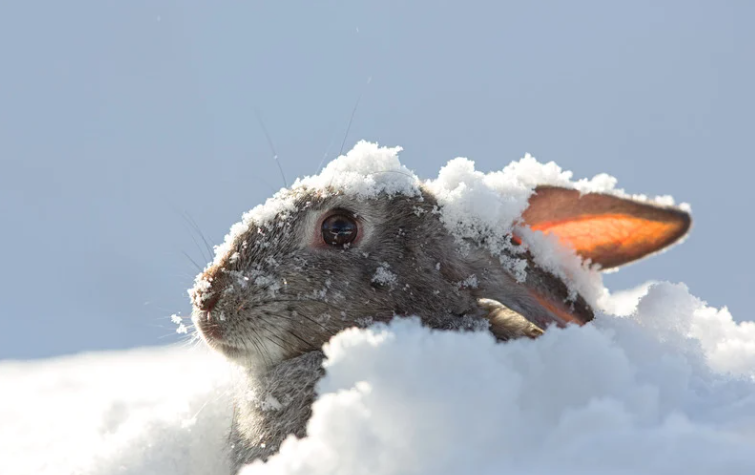
When winter arrives and temperatures drop, many people wonder how small, fluffy animals like rabbits manage to survive the cold. Despite their delicate appearance, bunnies are surprisingly well-equipped to handle winter weather. Through a mix of natural adaptations, clever behaviors, and survival instincts, rabbits can thrive even in freezing conditions.
Thick Winter Fur Keeps Them Warm
One of the most important ways rabbits survive winter is by growing a thicker coat. As daylight hours shorten in the fall, a rabbit’s body triggers the growth of dense winter fur. This coat traps warm air close to their body, acting like natural insulation.
Wild rabbits may look extra fluffy in winter, but that puffed-up appearance is actually a highly effective way to conserve heat.
Burrows Offer Natural Insulation
Rabbits don’t usually stay out in the open during winter storms. Instead, they rely on underground burrows, often called warrens. These tunnels provide excellent protection from wind, snow, and extreme cold.
The temperature underground stays much more stable than above ground, allowing rabbits to remain warm even during harsh weather. Many rabbits will share these spaces, and huddling together helps them conserve body heat.
Smart Feeding Habits
Food becomes harder to find in winter, so rabbits prepare in advance. In the fall, they increase their food intake slightly and build up small fat reserves. During winter, their diet shifts to whatever is available, such as:
Twigs and bark from shrubs and trees
Dried grasses
Woody plants
Rabbits also practice coprophagy, which means they eat special droppings called cecotropes. This allows them to extract extra nutrients from their food—an essential survival strategy when resources are limited.
Staying Active (But Not Too Active)
Unlike animals that hibernate, rabbits stay active all winter. However, they conserve energy by limiting unnecessary movement. You’ll often see rabbit tracks in the snow early in the morning or at dusk, when they briefly venture out to feed before returning to shelter.
By avoiding peak cold hours and staying close to cover, rabbits reduce heat loss and exposure to predators.
Camouflage in the Snow
Some rabbit species, such as the snowshoe hare, change color in winter. Their brown fur turns white, helping them blend into snowy environments. This camouflage protects them from predators when vegetation is scarce and hiding places are limited.
While not all rabbits change color, many still benefit from muted winter tones that help them stay hidden.
How You Can Help Wild Bunnies in Winter
If you have wild rabbits in your yard, small actions can make a difference:
Leave brush piles or natural debris for shelter
Avoid destroying burrows or nesting areas
Don’t remove all shrubs or low plants during winter
Never bring wild rabbits indoors—they are well adapted to the cold
Final Thoughts
Rabbits may look fragile, but they are remarkably resilient. With thick winter coats, insulated burrows, smart feeding strategies, and energy-saving behaviors, bunnies are perfectly designed to survive winter’s challenges. The next time you spot rabbit tracks in the snow, you’ll know just how much effort and adaptation went into that quiet journey.
Views: 19
https://shorturl.fm/nA9ep
https://shorturl.fm/YGwu8
https://shorturl.fm/GMX5h
Start profiting from your network—sign up today!
Start earning on every sale—become our affiliate partner today!
Earn passive income this month—become an affiliate partner and get paid!
Join our affiliate community and earn more—register now!
Get rewarded for every recommendation—join our affiliate network!
Get rewarded for every recommendation—join our affiliate network!
Apply now and unlock exclusive affiliate rewards!
Monetize your traffic instantly—enroll in our affiliate network!
Apply now and unlock exclusive affiliate rewards!
Partner with us and enjoy recurring commission payouts!
Unlock exclusive rewards with every referral—enroll now!
Refer customers, collect commissions—join our affiliate program!
Earn passive income this month—become an affiliate partner and get paid!
Share our products, reap the rewards—apply to our affiliate program!
Promote our products—get paid for every sale you generate!
Your influence, your income—join our affiliate network today!
Boost your income—enroll in our affiliate program today!
Apply now and unlock exclusive affiliate rewards!
Start earning on every sale—become our affiliate partner today!
Partner with us and earn recurring commissions—join the affiliate program!
Earn passive income on autopilot—become our affiliate!
Join our affiliate program today and start earning up to 30% commission—sign up now!
Boost your earnings effortlessly—become our affiliate!
Join our affiliate community and maximize your profits!
Monetize your audience—become an affiliate partner now!
Earn up to 40% commission per sale—join our affiliate program now!
Apply now and unlock exclusive affiliate rewards!
Earn big by sharing our offers—become an affiliate today!
Hello https://is.gd/tvHMGJ
Earn passive income on autopilot—become our affiliate!
Your audience, your profits—become an affiliate today!
Fast indexing of website pages and backlinks on Google https://is.gd/r7kPlC
Special ability to earn $ASTER bonus https://is.gd/CGTnqR
https://shorturl.fm/EQqvO
https://shorturl.fm/3MO1m
https://shorturl.fm/VZQN3
https://shorturl.fm/XljZd
https://shorturl.fm/0DDQO