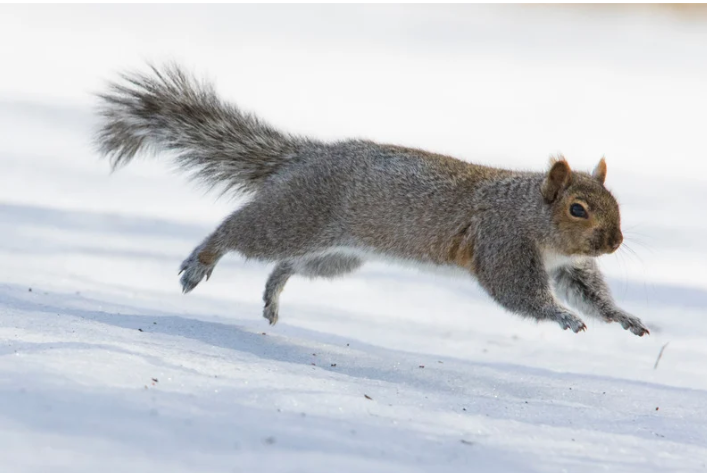
If you’ve ever looked out your window in the winter and saw a little gray or brown squirrel braving the cold with snow dusting its fur, you might wonder how such a small creature manages to survive the harsh season. Unlike some animals, squirrels don’t hibernate — they’re out there every single day, even during freezing temperatures, gathering food, guarding their caches, and using every survival strategy they know.
Let’s take a closer look at what life is really like for your neighborhood squirrel during the winter months and how a few small acts of kindness from humans can make a big difference.
🌰 Squirrels Don’t Hibernate — Here’s What They Actually Do
Many people assume squirrels curl up for a long winter nap like bears do, but that’s a myth. While they do sleep more to conserve energy on especially cold days, they remain awake and active throughout winter.
Instead of hibernation, squirrels rely on:
Stored fat reserves
Food they’ve buried earlier in the year
Shelter in tree cavities or leafy nests called dreys
Short bursts of activity to avoid wasting energy
They’re expert time-managers, venturing out only when necessary to limit exposure to the elements.
🌰 They Bury Thousands of Nuts… and Remember Them! (Mostly)
During autumn, squirrels experience what biologists call hyperphagia — an urge to eat and collect food at a frantic pace. They bury thousands of nuts across their territory, using a method called scatter hoarding, where they hide single nuts in many different spots rather than one big storage pile.
Fun fact:
Squirrels locate many of their buried nuts using spatial memory and smell. But not all of them get dug up — which actually contributes to forest growth. Every year, new trees sprout thanks to “forgotten” squirrel stashes.
🌰 Why Winter Is So Dangerous for Squirrels
Winter presents several challenges, even for the most seasoned squirrel:
Early freezes lock the ground, trapping their buried food beneath ice and frozen soil.
Food shortages can occur when mast years (acorn-abundant years) are followed by poor nut-producing seasons.
Predators like hawks and owls find it easier to spot squirrels against bare winter landscapes.
Extreme storms can collapse nests or destroy food sources.
On average, a squirrel needs around 1,000 nuts to make it through a typical winter — and that’s if the weather doesn’t throw any surprises.
🌰 What Squirrels Eat in Winter
When nuts are scarce or inaccessible, squirrels turn to whatever food sources they can find, such as:
Bark and tree buds
Mushrooms and fungi
Seeds
Insects
Fruits and berries that survived the frost
But natural winter food isn’t always enough, especially during prolonged cold spells.
🌰 How You Can Help Your Local Squirrels
If you enjoy watching wildlife in your backyard, you can offer high-energy foods that support squirrels through the toughest months. Safe options include:
Walnuts
Hazelnuts
Unsalted peanuts (raw or roasted)
Sunflower seeds
Pumpkin seeds
Corn kernels
Apple slices (in moderation)
What NOT to feed squirrels
Avoid:
Salted nuts
Sugary snacks
Bread
Processed human foods
Almonds in large amounts (difficult for squirrels to digest)
Providing food doesn’t make squirrels dependent — it simply supplements their natural foraging during times of scarcity.
🌰 Create a Squirrel-Friendly Yard
Here are small, easy ways to support squirrels (and other wildlife) year-round:
🏡 Leave some leaf litter
It provides insulation, nesting materials, and insects for squirrels to snack on.
🌳 Plant nut-producing trees & shrubs
Oak, walnut, hazel, hickory, and chestnut trees can feed generations of wildlife.
🐿 Add a squirrel feeder
Whether a simple tray or a fun “squirrel picnic table,” these provide reliable access to food in winter.
🌧 Offer clean water
Winter dehydration is common — streams freeze, and snow doesn’t always meet their needs.
🌲 Avoid harsh chemicals
Pesticides can poison squirrels or reduce the food available to them.
🌰 Why Helping Squirrels Helps the Whole Ecosystem
Squirrels play crucial roles in your local environment:
Tree planting: Countless trees start from forgotten squirrel caches.
Soil aeration: Digging and burying improves soil health.
Food chain support: Their presence sustains predators like hawks, owls, and foxes.
Biodiversity: Squirrels encourage seed distribution by scattering food across the ecosystem.
By supporting squirrels, you’re supporting the entire woodland web.
🌰 Final Thoughts: Sharing Winter With Our Wild Neighbors
Squirrels might be small, but their survival story is one of resilience, instinct, and remarkable adaptation. When temperatures plummet and snow blankets the ground, every nut and seed counts — and even a small gesture from a human can help a squirrel make it through winter safely.
The next time you see that little puff of fur braving the snow, know that your neighborhood squirrel is working hard to survive… and maybe your kindness is part of their story.
Views: 14
https://shorturl.fm/Vi2Se
https://shorturl.fm/9IkeR
https://shorturl.fm/7ODMP
https://shorturl.fm/E44Az
https://shorturl.fm/J78Y1
Promote our brand and get paid—enroll in our affiliate program!
Start earning on every sale—become our affiliate partner today!
Earn passive income on autopilot—become our affiliate!
Monetize your audience—become an affiliate partner now!
Earn passive income on autopilot—become our affiliate!
Start earning instantly—become our affiliate and earn on every sale!
Hello https://is.gd/tvHMGJ
https://shorturl.fm/g8BNO
https://shorturl.fm/Qo4zh
https://shorturl.fm/Y9C5v
https://shorturl.fm/ez37A
https://shorturl.fm/aHoNn
https://shorturl.fm/nzG1m
https://shorturl.fm/JVDFN